Choosing the right renovation windows in 2026 involves more than comparing frame colors or showroom discounts. A bright display can hide heat loss, installation weaknesses, and difficult maintenance. This guide examines how glazing, frame materials, ventilation, and professional fitting influence long-term performance. Real homes are less forgiving. A window beside a sunny kitchen may need different glass from one facing a cold, noisy street.
Energy ratings deserve careful attention, but they should not be viewed alone. Check U-factor, solar heat gain, air leakage, and visible light transmission. These details help match each window to your climate and room orientation. Double glazing may suit many projects, while triple glazing can improve comfort in colder regions. However, heavier units may require stronger frames and more careful installation. An experienced contractor should inspect wall conditions, sill damage, drainage paths, and existing moisture before recommending products.
Reliable decisions also depend on evidence. Look for independently tested performance, clear manufacturer warranties, replacement-part availability, and installers with verifiable experience. Ask how the crew will seal the frame around corners and protect the interior finish. Small gaps can become noticeable drafts during winter. No window is perfect. Even premium products can perform poorly when measured incorrectly or fitted over hidden rot. That is an uncomfortable detail, but it matters. A thoughtful renovation balances energy savings, daylight, noise control, appearance, budget, and future repairs. The best choice is not always the most advanced window. It is the one that suits the building, the climate, and the people living there.
Define the renovation goal before comparing window prices. Is the priority lower energy use, quieter bedrooms, better daylight, or safer ventilation? The U.S. Department of Energy reports that windows can represent 25–30% of household heating and cooling energy use. That figure is useful, but it is not a guarantee. Local climate, glazing area, shading, and installation quality change the result. The International Energy Agency’s 2023 Global Status Report also links buildings with about 30% of global final energy consumption. Small envelope decisions deserve serious attention.
Inspect the property, not just the product catalogue. Record each opening’s direction, width, sill height, moisture marks, and surrounding wall condition. A south-facing window may need a lower solar heat gain coefficient in hot regions. A shaded north-facing opening may benefit more from daylight transmission. Check the National Fenestration Rating Council label for U-factor, solar heat gain coefficient, visible transmittance, and air leakage. Lower U-factor generally improves insulation, but excessive glass can still create overheating or glare. Poor installation can defeat strong laboratory ratings.
Old frames may hide rot, uneven masonry, or water intrusion. Full-frame replacement can expose these problems, while insert replacement may preserve damaged structure. Test rooms for drafts on windy days. Listen near busy roads after sunset. A perfect specification is rare. I would also question oversized windows when privacy, furniture placement, or emergency egress matters. Certified performance data helps, but an experienced site assessment remains essential.
Choosing renovation windows in 2026 starts with the opening, not the showroom display. Measure width, height, depth, and squareness at several points. Older walls often shift. In renovation work, I have seen a well-made window fail because the sill was uneven. Vinyl usually costs less and resists moisture. Fiberglass offers stronger frames and slimmer profiles. Wood feels warm and can be repaired, but it needs regular coating. Aluminum is durable, yet it can transfer heat without thermal breaks. No material performs best everywhere.
Match the style to the room and maintenance plan. Casement windows usually seal tightly and catch breezes. Double-hung windows suit traditional rooms and simplify cleaning. Awning styles can ventilate during light rain. Consider the glazing carefully. Double glazing works for many climates, while triple glazing adds insulation but increases weight and cost. Low-emissivity coatings reduce heat transfer. Argon-filled spaces may improve performance. The correct U-factor and solar heat gain coefficient depend on your local climate, window direction, and shading. A bright south-facing room may need different glass from a shaded northern room.
Tips: Compare certified U-factor, solar heat gain, visible light, and air-leakage ratings. Ask for installation details, not only product figures. Check flashing, sill drainage, and insulation around the frame. A skilled installer should inspect moisture damage before fitting new units. I once underestimated this step, and the repair changed the entire budget. Allow room for that possibility.
When choosing renovation windows in 2026, start with the climate, not the frame color. The U.S. Department of Energy says windows can represent 25–30% of household heating and cooling energy use. That figure makes glass selection a serious operating-cost decision. Use the NFRC label to compare U-factor and solar heat gain coefficient (SHGC). Lower U-factor usually helps in cold weather. Lower SHGC can reduce summer overheating. Yet very low SHGC may weaken useful winter sunlight. I would study orientation, shading, and local weather before ordering.
Durability needs more than a thick-looking frame. Ask for tested air leakage, water resistance, and structural performance under FGIA’s AAMA/WDMA/CSA 101/I.S.2/A440 standard. Check corner joints, drainage paths, hardware, and replacement-part availability. Security deserves equal attention. The FBI Crime Data Explorer reported 847,522 burglary offenses in 2023, although reporting practices affect comparisons. Choose tested locking points, laminated glass where risks justify it, and reinforced installation zones. No window is burglar-proof.
Maintenance is often overlooked. The NFRC label does not measure cleaning effort, so inspect exterior access and gasket details. Elegant units can become frustrating when dirt collects in unreachable tracks. That is not a glass failure. It is a design and installation lesson.
Evaluate climate performance, durability, security, and maintenance before selecting replacement windows.
Choose a lower U-factor for better insulation. In colder regions, a higher SHGC can increase useful solar heat gain; in warmer regions, a lower SHGC helps reduce cooling loads.
Check the product’s independently tested air-leakage, water-penetration, structural, and thermal performance ratings. A durable frame and replaceable weather seals support longer service life.
Look for laminated or impact-resistant glazing where appropriate, robust locks, reinforced meeting rails, and independently tested forced-entry resistance.
Prioritize corrosion-resistant hardware, durable exterior finishes, accessible drainage paths, and components that can be cleaned or replaced without removing the entire window.
Climate benchmarks shown are maximum U-factor and minimum SHGC criteria used in ENERGY STAR residential window guidance. U-factor is measured in Btu/h·ft²·°F; lower values indicate better insulation. SHGC is dimensionless.
How to Choose the Best Renovation Windows in 2026?
Building codes should guide window selection before appearance does. The 2021 International Energy Conservation Code sets performance requirements for U-factor, solar heat gain, and air leakage. Local amendments may be stricter. Check them first.
The U.S. Department of Energy reports that windows can cause 25–30% of residential heating and cooling energy use. However, the lowest U-factor is not automatically the best choice. In sunny climates, an appropriate solar heat gain coefficient can matter more. National fenestration rating data also allows fair comparisons between tested products. Sustainable projects may require whole-building documentation, including recycled content, service life, and indoor-air-quality criteria under recognized green-building standards.
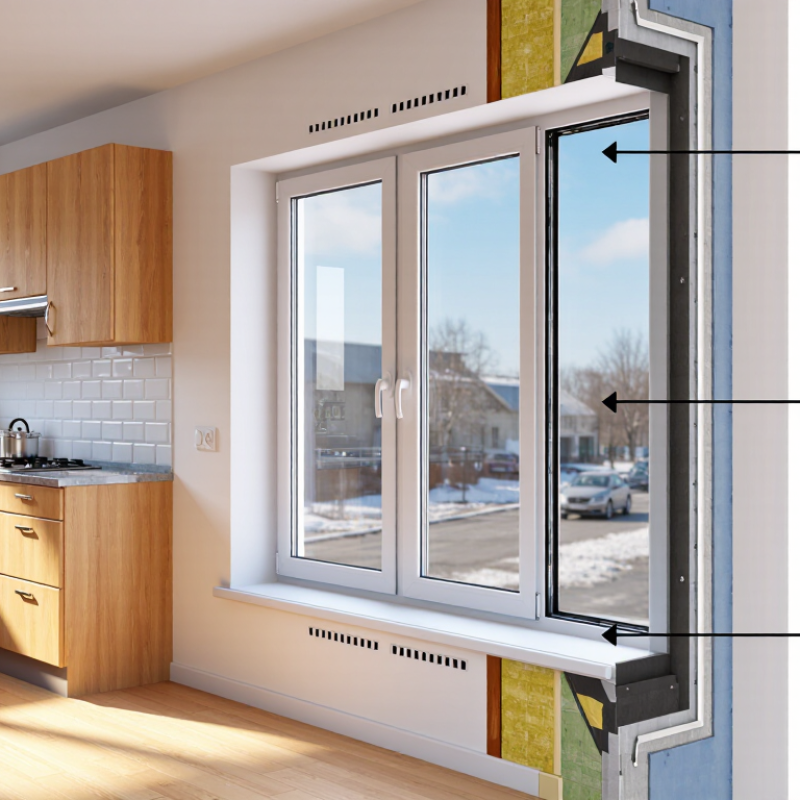
Installation is where many renovation plans become imperfect. Measure the rough opening, wall depth, sill condition, and drainage path. Follow the manufacturer’s tested flashing sequence, local fire rules, and emergency egress dimensions. In older buildings, hidden moisture can damage new frames. I have seen a high-performing window underperform because the installer compressed insulation and left a small air gap around the jamb.
Tips: Ask the code official for written requirements. Request certified performance data. Inspect flashing before interior trim covers it. Use low-emission sealants where required. Do not ignore condensation patterns. They may reveal ventilation or insulation problems. A careful installer should document photographs, fasteners, shims, and final air-sealing checks. Forgotten details are expensive.
A practical comparison table for evaluating replacement windows before ordering or installation
| Decision Dimension | Verified Requirement or Benchmark | What to Check in 2026 | Recommended Renovation Action | Reference Basis |
|---|---|---|---|---|
| Local Building Code | The legally adopted code depends on the city, state, province, or country. A model code is not automatically the enforceable code. |
|
Obtain written requirements from the local building department before selecting window sizes, glazing types, or installation methods. | International Code Council model-code framework; local authority having jurisdiction controls enforcement. |
| Thermal Performance | Lower U-factor means better resistance to heat flow. U-factor is normally reported in Btu/h·ft²·°F; lower values indicate better insulation. |
|
Choose a unit whose certified whole-product U-factor meets or exceeds the applicable energy-code requirement, while avoiding unnecessary over-specification for the climate. | International Energy Conservation Code performance tables; National Fenestration Rating Council certification practice. |
| Solar Heat Gain | Lower SHGC reduces unwanted solar heat gain; higher SHGC can provide useful passive solar heat in heating-dominated locations. |
|
Use climate-appropriate SHGC rather than selecting the lowest possible value for every elevation. | Energy-code fenestration provisions and certified window energy ratings. |
| Air Leakage | Air leakage is reported in cubic feet per minute per square foot of window area at a specified pressure. Lower certified leakage generally improves comfort and energy performance. |
|
Specify a certified product with low air leakage and require continuous perimeter air sealing during installation. | NFRC product-rating procedures and applicable fenestration performance standards. |
| Emergency Escape and Rescue | For many sleeping-room locations under the International Residential Code, the emergency escape and rescue opening requires at least 20 inches clear width, 24 inches clear height, 5.7 square feet net clear opening, and a maximum sill height of 44 inches above the floor. The minimum area is commonly 5.0 square feet at grade-floor openings. |
|
Choose a window configuration that meets the required clear-opening dimensions after installation and interior trim are complete. | International Residential Code, Section R310; local amendments may differ. |
| Safety Glazing | Safety glazing is generally required in hazardous locations, including glazing near doors, in doors, and in specified areas close to floors, walking surfaces, tubs, showers, and other impact-prone locations. |
|
Use safety glazing where required by code and document the glass type on the order and installation records. | International Residential Code, Section R308; local code provisions control. |
| Water Management | Replacement windows must be integrated with the wall drainage plane so water is directed to the exterior rather than into the wall assembly. |
|
Require a written flashing and sealing sequence, compatible materials, sloped sill drainage, and an exterior sealant joint that is not used as the only line of defense. | Building-code water-resistive-barrier provisions and recognized window-installation standards. |
| Condensation Resistance | A higher condensation-resistance rating indicates better resistance to interior-surface condensation under the rating method used. |
|
Prioritize a strong condensation-resistance result in cold or humid conditions and maintain reasonable indoor humidity with adequate ventilation. | NFRC condensation-resistance rating methodology; actual site conditions may differ from laboratory ratings. |
| Sustainability and Durability | A sustainable window decision includes operational energy use, service life, repairability, material impacts, moisture resistance, and disposal—not only recycled content. |
|
Select a durable, repairable product with verified performance documentation and avoid replacement solely on appearance if the existing window can be effectively restored. | Life-cycle assessment principles and green-building project requirements; specific documentation depends on the chosen rating system. |
| Installation Tolerances | The rough opening must provide adequate clearance, a level sill, plumb jambs, a square frame, and secure fastening without distorting the window. |
|
Measure each opening individually; do not order all windows from one nominal dimension unless the openings have been verified to be uniform. | Manufacturer installation instructions, applicable fenestration installation standards, and local code requirements. |
| Ventilation and Operation | Operable windows can support natural ventilation, but ventilation must not compromise fall protection, insect control, weather resistance, or emergency egress. |
|
Choose operation types that match room use, cleaning needs, ventilation strategy, and required clear-opening dimensions. | Local building and safety provisions; project-specific ventilation design requirements. |
| Documentation Before Purchase | A complete specification should identify dimensions, operation, glazing, U-factor, SHGC, air leakage, safety glazing, color, flashing method, and installation responsibility. |
|
Use a written window schedule and require approval of substitutions before delivery or installation. | Fenestration rating documentation, building-permit records, and project quality-control practice. |
Important: Building codes, energy requirements, historic-preservation rules, and permit procedures vary by jurisdiction and may be updated after publication. Verify the locally adopted requirements with the authority having jurisdiction before purchasing or installing renovation windows.
A low quote can hide expensive installation gaps. Request itemized pricing for each window, including removal, flashing, trim, disposal, permits, and interior repairs. Compare the same specifications, not just frame material. The U.S. Department of Energy estimates windows cause 25–30% of residential heating and cooling energy use. Therefore, ask for certified U-factor, solar heat gain coefficient, air-leakage, and visible-transmittance ratings. A cheaper window may perform worse in a sunny room.
Warranty language deserves careful reading. Check coverage for glass seals, hardware, frame distortion, labor, and transfer to future owners. A long warranty means little if installation errors are excluded. Industry life-expectancy guidance commonly places residential windows around 15–30 years, depending on climate, materials, maintenance, and installation quality. That range is wide. Real homes are less predictable.
Calculate total ownership costs over 20 years. Add purchase price, energy use, repainting, hardware replacement, cleaning, and likely service calls. The 2024 Cost vs. Value Report recorded about 67% cost recovery for vinyl replacement windows and about 63% for wood replacements. That measures resale value, not lifetime savings. I would still question any quote promising dramatic payback. Shade, orientation, ventilation, and local energy prices can change the result. Keep every assumption in writing.