
10 Tips for Buying Double Windows from Global Suppliers?
Buying double windows from global suppliers can reduce costs, improve comfort, and expand design options. However, attractive prices may hide performance gaps, unclear specifications, or costly shipping problems. This guide introduces ten practical tips for making safer purchasing decisions.
Dr. Wolfgang Feist, founder of the Passivhaus Institut, has emphasized, “A window must be considered as a whole system.” His principle applies directly to double windows. Glass, frames, spacers, seals, hardware, and installation details work together. A strong quotation means little if the complete assembly performs poorly.
Experienced buyers should compare U-values, solar heat gain, air leakage, water resistance, and acoustic ratings. Ask suppliers for independent laboratory reports, not only brochures. Check whether certificates match the exact profile, glass package, and production location. Request physical samples. Feel the frame, inspect the corner joints, and examine the gasket compression.
Global purchasing also requires careful checks on factory experience, minimum order quantities, packaging, lead times, and replacement policies. Confirm measurements in writing. A few millimeters can create serious installation problems. Clarify Incoterms, customs responsibilities, warranty coverage, and technical support before payment.
Some buyers focus too heavily on unit price. That is understandable, but incomplete. A cheaper window may require stronger installation work or earlier replacement. I have seen specifications look perfect on paper, yet practical questions remained unanswered. That uncertainty deserves attention.
These ten tips will help readers assess suppliers with greater confidence. They will also encourage better questions before choosing double windows for residential, commercial, or energy-efficient building projects.
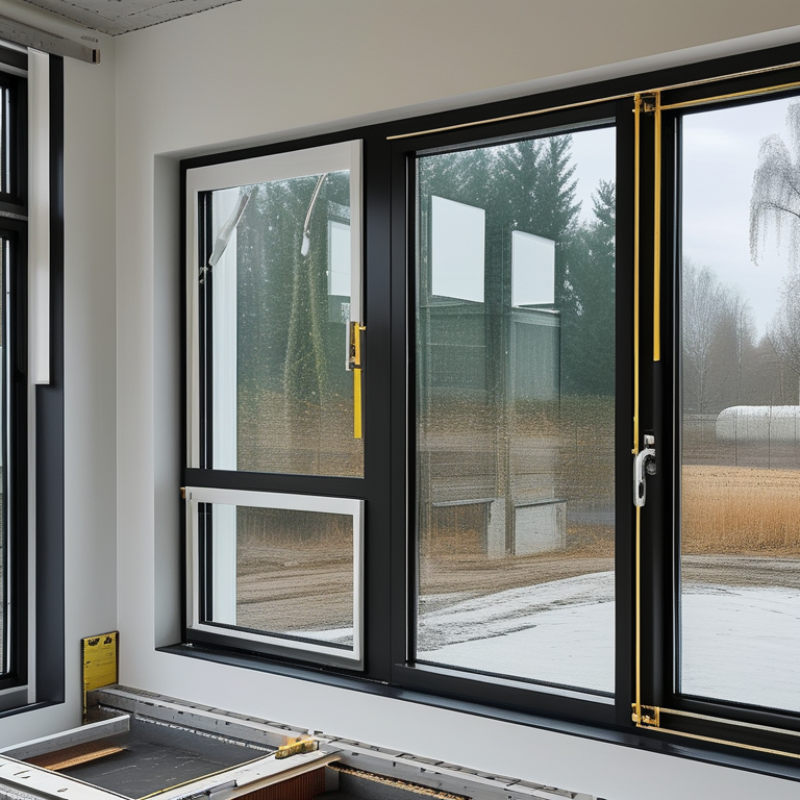
Define Double Windows and Their Main Performance Benefits
Define Double Windows and Their Main Performance Benefits
Double windows, often called double-glazed windows, contain two glass panes divided by a sealed spacer. The cavity usually holds air or an inert gas, while low-emissivity coatings may reduce radiant heat transfer. This structure creates a thermal barrier, not a complete energy solution. Frame quality, edge seals, installation, and local climate still matter.
The U.S. Department of Energy reports that windows can represent about 25–30% of residential heating and cooling energy use. Double glazing can reduce this loss by improving insulation and lowering the window’s U-factor. Lower is better. The National Fenestration Rating Council also measures solar heat gain through SHGC ratings. A lower SHGC can help in hot climates, while a higher value may support passive heating in colder regions. Choosing incorrectly is easy.
Comfort improves too. Interior glass stays warmer during winter, which can reduce cold drafts and condensation near the sill. The sealed airspace also weakens outdoor noise, although traffic noise may still pass through matching glass thicknesses. In practice, I would request certified U-factor, SHGC, visible transmittance, and air-leakage figures from global suppliers. Manufacturer claims alone are not enough. Small details matter. A damaged spacer or poor installation can undermine expensive glass. ENERGY STAR technical guidance also emphasizes climate-specific window selection, reminding buyers that “better” depends on location, orientation, and building design.
10 Tips for Buying Double Windows from Global Suppliers: Define Double Windows and Their Main Performance Benefits
| No. | Buying Tip | What Double Windows Are | Main Performance Benefit | Key Data or Specification to Verify | Practical Procurement Check |
|---|---|---|---|---|---|
| 1 | Confirm the basic construction | A double-glazed window has two panes of glass separated by a sealed insulating cavity, usually filled with air or an inert gas such as argon. | Reduces heat transfer compared with single glazing and improves indoor comfort. | Two panes; sealed cavity; typical cavity width: about 12–20 mm | Request a cross-section drawing showing glass thickness, spacer width, cavity material, seals, and frame profile. |
| 2 | Compare whole-window thermal performance | The window’s U-value measures heat transfer through the complete window assembly. Lower values indicate better insulation. | Can reduce conductive heat loss in heating climates and limit heat gain in cooling climates. | Whole-window U-value: commonly about 1.0–2.5 W/m²·K, depending on design | Compare the certified whole-window value, not only the center-of-glass value. |
| 3 | Check the glass specification | Glass options may include clear, low-emissivity coated, laminated, tempered, or solar-control glass. | Low-emissivity coatings can improve insulation, while solar-control coatings can reduce unwanted solar heat gain. | Ask for U-value, visible transmittance, and solar heat gain coefficient (SHGC) | Match the glass type to the local climate, orientation, daylight needs, and building energy requirements. |
| 4 | Evaluate the spacer and edge seal | The spacer keeps the panes apart, while the primary and secondary seals help maintain the insulating cavity. | Warm-edge spacers and durable seals can reduce edge condensation and help preserve long-term insulating performance. | Spacer material, sealant type, gas retention, and condensation resistance | Ask for seal durability data, production-process details, and the expected service-life conditions. |
| 5 | Select the right frame material | Common frames include uPVC, thermally improved aluminum, timber, and composite constructions. | Frame design affects thermal insulation, structural strength, weather resistance, maintenance, and appearance. | Frame Uf-value, thermal breaks, air chambers, drainage design, and reinforcement | Ensure the frame is suitable for the opening size, wind exposure, humidity, and installation method. |
| 6 | Verify air, water, and wind performance | Window performance depends on the complete unit, including sash, frame, gaskets, hardware, and drainage paths. | Good sealing helps prevent drafts, water penetration, and performance loss during severe weather. | Air permeability, watertightness, and wind-load resistance classifications | Request test reports based on recognized regional or international window-testing standards. |
| 7 | Assess acoustic performance | Two panes create an additional sound barrier, although the result depends on pane thickness, cavity width, frame, and installation. | Can reduce outdoor noise from traffic, machinery, and dense urban environments. | Weighted sound-reduction index, commonly expressed as Rw in decibels (dB) | For noisy locations, consider asymmetric glass thicknesses or laminated acoustic glass rather than identical panes. |
| 8 | Consider safety and security features | Safety options include tempered or laminated glass; security depends on the complete frame, locking system, and hardware. | Tempered glass breaks into smaller particles, while laminated glass remains bonded after breakage and can improve forced-entry resistance. | Glass safety classification, laminated interlayer, locking points, and hardware grade | Specify opening restrictors, child-safety features, multi-point locks, and applicable security classifications where required. |
| 9 | Check size, tolerances, and installation requirements | Window performance is affected by manufacturing accuracy, opening dimensions, fixing points, perimeter seals, and correct shimming. | Correct installation helps maintain thermal, acoustic, air-tightness, and water-resistance performance. | Manufacturing tolerance, maximum sash size, unit weight, fixing method, and installation gap | Provide verified site measurements and require installation instructions, packing details, and compatible sealants. |
| 10 | Review compliance, warranty, and landed cost | Global purchases should account for product testing, documentation, packaging, transport, customs, replacement parts, and after-sales support. | Reliable documentation and support reduce project risk and help preserve performance throughout the product’s service life. | Test certificates, warranty terms, spare-parts availability, packaging standard, and total delivered cost | Compare equivalent specifications, define acceptable defects, confirm delivery responsibilities, and obtain samples before placing a bulk order. |
Related Posts
-
Essential Tips for Choosing Double Glazed Windows?
-
Top 10 Benefits of Triple Glass Windows in China Today?
-
Top 10 Benefits of Retrofit Windows for Energy Efficiency and Comfort
-
Why Choose Triple Glazed Windows for Better Energy Efficiency and Comfort
-

How to Choose the Best Triple Glass Windows for Your Home in 2025
-

Why Choose Double Casement Windows for Your Home?